

Introduction
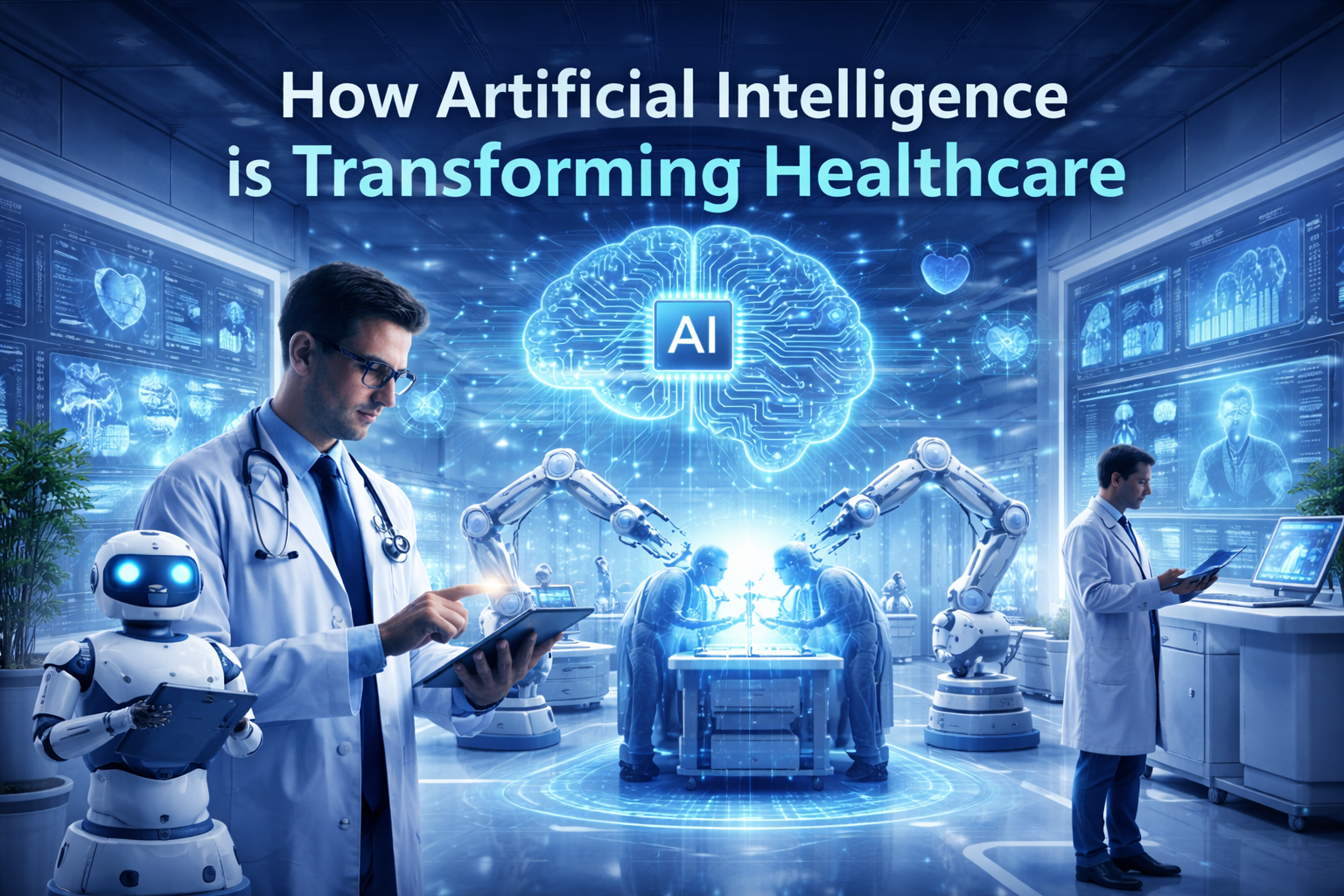
Artificial Intelligence (AI) is revolutionizing the healthcare industry by improving diagnosis, treatment, and patient care. With the help of machine learning, data analytics, and automation, healthcare providers can deliver faster, more accurate, and efficient services.

Applications of AI in Healthcare
1. Medical Diagnosis
AI helps doctors detect diseases such as cancer and heart conditions early through advanced imaging and data analysis.
2. Drug Discovery
AI speeds up the process of discovering new medicines by analyzing large datasets quickly.
3. Robotic Surgery
AI-powered robots assist surgeons in performing precise and minimally invasive surgeries.
4. Virtual Health Assistants
Chatbots and virtual assistants help patients schedule appointments and get basic medical advice.
Benefits of AI in Healthcare
- Improved accuracy in diagnosis
- Faster treatment decisions
- Reduced healthcare costs
- Better patient experience
- Efficient hospital management
Challenges of AI in Healthcare
- Data privacy concerns
- High implementation cost
- Need for skilled professionals
- Ethical considerations
Future of AI in Healthcare
AI will continue to transform healthcare with personalized treatments, predictive analytics, and advanced medical research, making healthcare more accessible and efficient worldwide.

Conclusion
Artificial Intelligence is reshaping the healthcare industry by improving patient outcomes and making medical services more efficient. As technology advances, AI will play an even greater role in delivering high-quality healthcare.