
Introduction
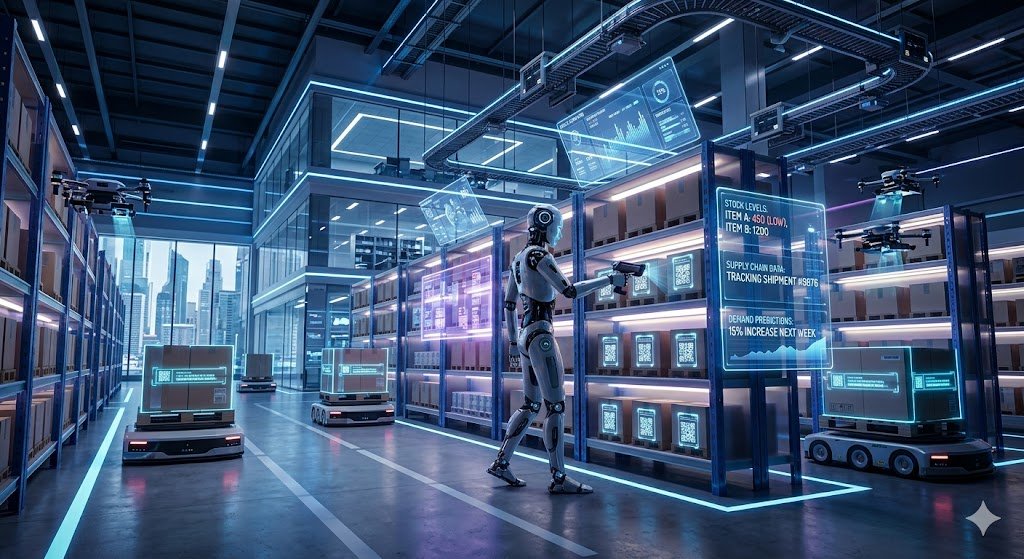
AI in Inventory Management is transforming how businesses manage stock in 2026. Instead of relying on manual tracking and guesswork, companies are now using artificial intelligence to monitor inventory levels and predict demand accurately.
This helps businesses avoid stock shortages, reduce waste, and improve overall efficiency.
What is AI in Inventory Management?
AI in inventory management uses artificial intelligence to track, manage, and optimize stock levels. It analyzes data such as sales patterns, demand trends, and supply chain information to ensure the right products are available at the right time.
How AI in Inventory Management Works
1. Real-Time Inventory Tracking
AI tracks stock levels continuously, ensuring businesses always know what is available.
2. Demand Prediction
AI analyzes past sales data to predict future demand accurately.
3. Automated Reordering
AI automatically places orders when stock levels fall below a certain limit.
4. Stock Optimization
AI ensures optimal inventory levels to avoid overstocking or shortages.
5. Supply Chain Coordination
AI improves coordination between suppliers and warehouses for smooth operations.
Benefits of AI in Inventory Management
- Reduces stock shortages
- Minimizes excess inventory
- Improves supply chain efficiency
- Saves time and effort
- Enhances business profitability
AI in inventory management helps businesses maintain the perfect balance between supply and demand.
Real-World Example
Retail and e-commerce companies use AI to track inventory and forecast demand. This helps them ensure products are always available without overstocking.
Future of AI in Inventory Management in 2026
In 2026, AI in inventory management will become more advanced, enabling fully automated inventory systems that require minimal human involvement.
Businesses that adopt this technology early will gain a strong competitive advantage.
Advanced Inventory Optimization Techniques
Smart Demand Forecasting
Modern systems analyze historical sales data, seasonal trends, and customer behavior to predict future demand accurately. This helps businesses prepare in advance and avoid sudden shortages.
Automated Stock Replenishment
Instead of manually checking inventory, automated systems reorder products when stock reaches a minimum level. This ensures continuous availability without human effort.
Warehouse Efficiency Improvement
Automation improves warehouse operations by organizing products, reducing search time, and speeding up order processing. This leads to faster deliveries and better customer satisfaction.
Real-Time Alerts and Monitoring
Businesses receive instant alerts when stock levels change or unusual patterns are detected. This helps in taking quick action and preventing losses.
More Business Advantages
Reduced Operational Costs
Automation reduces the need for manual labor and minimizes errors. This helps businesses save money and operate more efficiently.
Better Customer Experience
When products are always available, customers are more satisfied and more likely to return. This improves brand trust and loyalty.
Data-Driven Planning
With accurate insights, businesses can plan better strategies for purchasing, stocking, and selling products. This leads to improved performance.
Scalable Inventory System
As a business grows, automated systems can handle increasing stock and operations without additional complexity.
This approach also helps businesses improve coordination between suppliers, warehouses, and delivery systems. With better visibility and faster communication, companies can reduce delays, avoid disruptions, and maintain smooth operations. Over time, this leads to stronger supply chain performance and more reliable service for customers. This ultimately supports is long-term stability and helps businesses achieve consistent growth in competitive markets.
To learn more about AI, visit IBM Artificial Intelligence.
Conclusion
AI in inventory management is changing how businesses handle stock and supply chains. By using AI, companies can reduce errors, improve efficiency, and ensure products are always available.
Adopting AI in inventory management in 2026 is essential for businesses that want to stay competitive and grow efficiently.
You can also read our guide on AI Workflow Automation to understand how automation improves business processes.


